7950 Legacy Drive, Suite 400, Plano, TX 75024
  469-375-9656
  info@planowebsitedesign.com







McKinney’s event economy is about to change scale: the Sunset Amphitheater is set to bring touring acts and their crowds, Cannon Beach’s surf resort is underway, and the square’s festival calendar keeps growing. Event nights compress thousands of hungry, searching, unfamiliar people into predictable windows. Businesses that build the event-night playbook now (hours, content, staffing, and timed visibility) will own those windows for years.
Table of Contents
What’s Changing in McKinney’s Event Calendar
McKinney has always had a rhythm of square festivals and weekend draws. What’s arriving is different in kind: a major amphitheater set to put touring-act crowds on the calendar dozens of nights a year, a destination surf resort underway at Stacy and 121, and the steady growth of the existing festival slate. Each event night relocates thousands of people, many from outside McKinney, into a few square miles for a few hours, with money to spend on either side of the main attraction. Cities that gain this kind of calendar see a permanent new revenue layer form around it. The only question is which businesses it forms around.
The Anatomy of an Event Night
Every event night has the same three acts. Before: the dinner rush, ninety minutes of “restaurants near the amphitheater” and “quick dinner McKinney” searches from cars and couches. During the quiet window and the parking, rideshare, and “drinks near” queries from early arrivals and skip-the-opener types. After the surge, nobody plans for dessert, late food, or “open now” searches at 10:45 p.m. from a crowd that just discovered everything closes at 10. The after-window is the least contested and most loyal-making: be reliably open and findable when the show lets out, and you become the post-concert habit for an entire season of audiences.
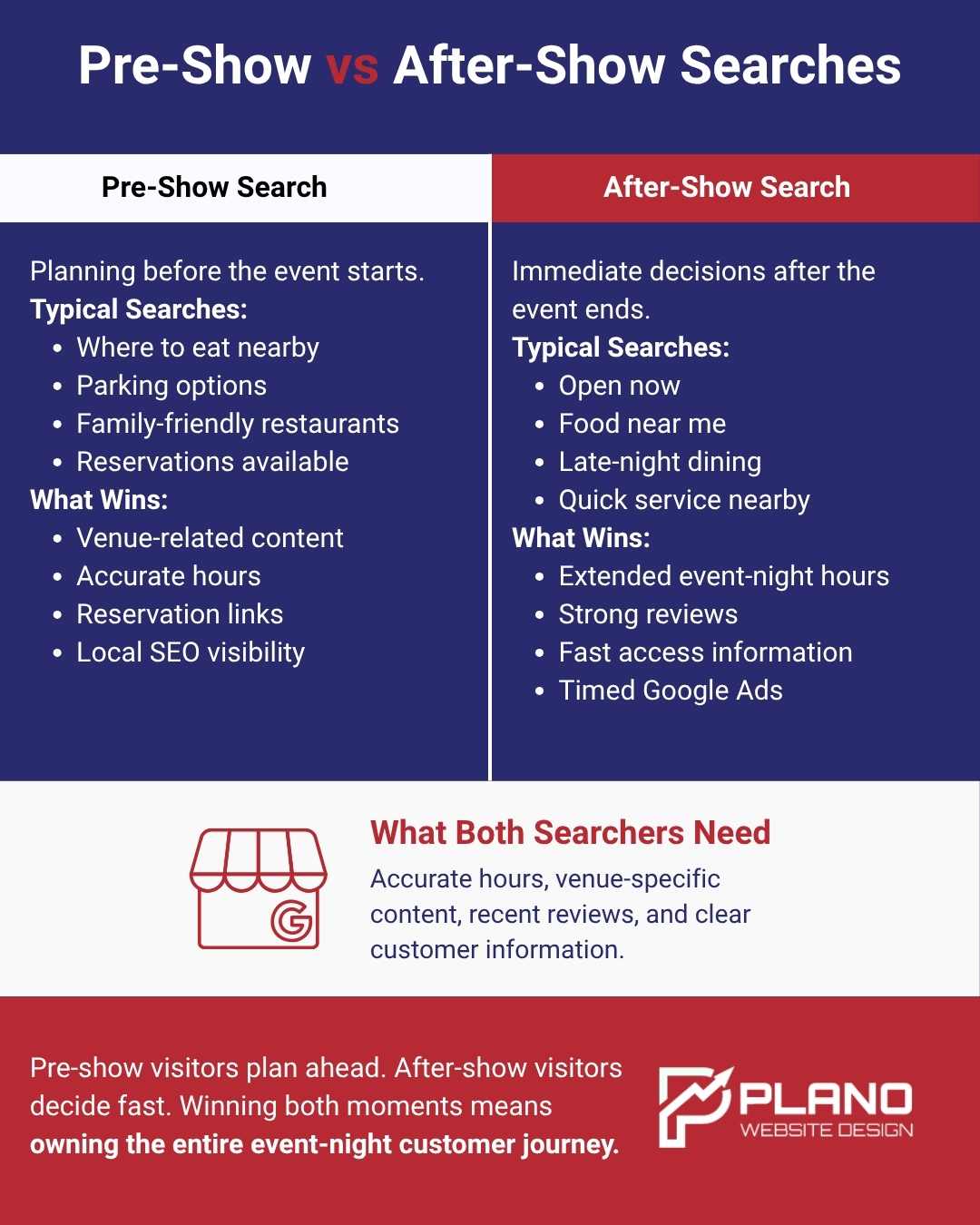
Event-night searches have a signature: they’re from strangers, they’re urgent, and they’re brutally practical: open now, distance, parking, and speed. Winning them is mechanical. Hours on your Google profile that explicitly cover event nights (and special-hours entries for the big dates). Content that names the venues and answers the practical questions: how far is it? Where do you park? Do you take walk-ins at 10:30? Review depth, because strangers default to ratings. And for the biggest dates, modestly timed campaigns aimed at the event window’s predictable demand spikes are the cheapest advertising opportunities in local marketing because the demand does the targeting for you.
Building Your Event-Night Playbook
Make it a checklist you run per date, not a strategy you admire once: the season’s calendar pulled into your planning (the amphitheater’s schedule, square festivals, Cannon Beach’s eventual programming); staffing and kitchen hours matched to the windows; special hours set on your profile the week before; an event-night page or post published per major date; and a measurement habit comparing event-night revenue to a normal night, per event, so the playbook earns its keep with numbers. Run it for a season and you’ll know exactly which kinds of events feed your business and which just clog your parking.
The Locals’ Counter-Move
One more layer, easy to miss: on big event nights, your regulars flee the crowds, and that’s an opportunity too. The counter-programming play serves locals deliberately on event nights (e.g., “skip the concert traffic locals’ night, this side of town”) or rides the displaced demand on the quieter side of the city. Whether you chase the surge or serve the refuge, the principle is the same: event nights reshuffle the whole city’s demand map for a few hours, and businesses that plan for the reshuffle either direction beat the ones that just experience it. (If your website can’t publish an event-night page without a developer and a week’s notice, that’s the foundation to fix first.
Want an event-night readiness check before the amphitheater’s first season? The free AI Search & SEO Audit covers it. Call 469-375-9656.